
The Pantheon is one of the best-preserved buildings of ancient Rome and one of the city’s most visited attractions. In 2027 it operates as an active Catholic basilica with paid timed entry on most days. This page covers the exact ticket prices for 2027, who gets in free, how and where to book, and the rules that catch first-time visitors out. Prices, hours and rules are taken from the Ministry of Culture’s own pages; the queue and checkout detail is from our own visits.
Do you need a ticket for the Pantheon?
Yes. In 2027, everyone aged 18 or over needs a ticket to go in, unless they belong to one of the free categories listed below or they are visiting on the first Sunday of the month. This is not a donation box: the fee is a state museum admission charge, and the only tickets that work at the door are the ones sold through the Musei Italiani portal, the Musei Italiani app, the ticket office on site or the automatic machines beside it. Tickets from unauthorised resellers can be refused at the entrance.
Two things trip people up. The Pantheon is a working Catholic church — the Basilica of Santa Maria ad Martyres — so worshippers attending Mass enter free, and the building is reserved to them for the duration of the service. And you will still read, in plenty of places, that entry is free on Sundays. Ordinary Sundays are paid. The free day is the first Sunday of each month.
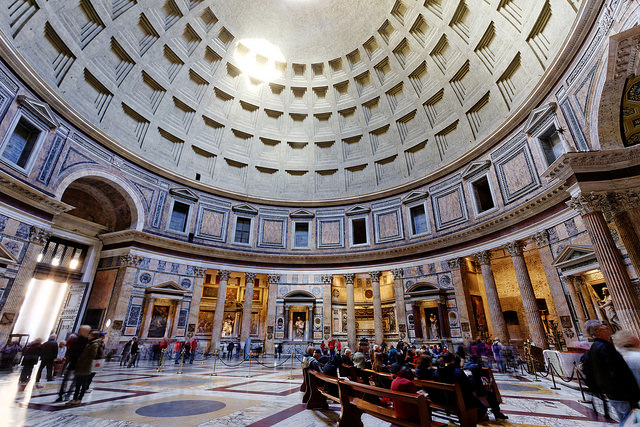
What the €7 buys is timed entry to a 2nd-century interior 43.30 m across and 43.30 m high, under the largest unreinforced concrete dome ever built. No free viewpoint shows you the inside; the piazza shows you the portico and nothing more.
2027 Ticket Prices
The Pantheon’s ticket prices changed on 1 July 2026, under an agreement between the Ministry of Culture and the Diocese of Rome signed on 10 April 2026. The full-price ticket rose from €5 to €7. The reductions and free categories were left unchanged, and the Ministry has announced no further change since: the figures below are the ones on its own page today.
| Ticket type | Price | Who qualifies |
|---|---|---|
| Full ticket | €7 | Everyone aged 18 or over who does not qualify for a reduced or free ticket |
| Reduced ticket | €2 | EU citizens aged 18–25 with valid photo ID |
| Free entry | Free | Under-18s; residents of Rome with ID; licensed tour guides; worshippers attending Mass; and on the first Sunday of each month (Domenica al Museo) |
💳 The price at a glance
- Full price: €7 — bought on the day or booked in advance, the price is the same.
- Reduced: €2 — EU citizens aged 18–25 only. Bring ID; the ticket is nominal and checked against your name.
- Free: under-18s, Rome residents, guides, worshippers, first Sunday of the month.
- Free and reduced entry still needs a ticket: the free categories get a named ticket and an ID check, and the first Sunday gets a paper ticket from the one queue that serves everybody.
- An audio guide is not included in the €7 ticket. It is sold separately at the basilica’s desk by the Chapter of Santa Maria ad Martyres, or bundled with entry by resellers.
How to Book Pantheon Tickets
Entry runs in hourly time slots, 09:00 to 18:00, and you are expected to turn up in the slot you chose. You can buy at the door — the ticket office and the vending machines sell the same €7 ticket — but you pay for it in queue time, as the queue section below sets out. Slots for the following month open in the middle of the current month, so book as soon as your travel dates are fixed.
Official channel — museiitaliani.it
The official Ministry of Culture booking portal is museiitaliani.it. It sells the €7 entry ticket, and its own guided tours in Italian, English and Spanish — but no audio guide. Tickets are nominal: the name on the booking must match the ID you bring, and it is checked at entry.
Step by step: buying on museiitaliani.it
The portal sells for most state museums in Italy, so the first job is picking the right entry. Search “pantheon” and the listing comes up under its full Italian name: PANTHEON E BASILICA DI SANTA MARIA AD MARTYRES, Piazza della Rotonda, snc – 00186 (RM). The sales page opens in Italian; switch it to English at the top before you start choosing.
Six products are listed for each month:
- Museum entrance (this month) — the standard €7 entry ticket, and the one almost everyone wants.
- Guided tour in Italian, and the same tour in English and Spanish — separate products, and the English one is often sold out.
- Ad occhi chiusi — a guided tour in Italian for blind and partially sighted visitors.
- Museum entrance (next month) — the same €7 ticket, released one month ahead.
Two limits apply before you reach the calendar. You cannot buy further ahead than next month, and a single purchase is capped at 25 tickets, once per user per time slot — so larger groups split the booking across accounts.
Choose the date, then the time slot. Slots run by the hour from 09:00, with last entry at 18:30 for a 19:00 close. Pick a slot you can actually reach: the time on the ticket is when you go in, not when you have to leave.
Next come the names. Every ticket is nominal, so enter the full name of the person who will use it — open the Visitor 1 arrow and fill the fields, one visitor at a time. An email per visitor is optional; add one you can reach on your phone if you are already travelling.
Payment is by card or PayPal. The Italian state payment processor, pagopa, refuses some foreign cards; if yours is declined, open Other payment methods, scroll to the Intesa Sanpaolo PayPal option and pay through PayPal instead. A small processing fee is added at that step — €1.50 when we last checked, on a €5 ticket; the Ministry publishes no booking fee of its own. Tickets are issued as soon as the payment clears and arrive as a PDF attached to the email you registered.
None of this is difficult, but it is a long checkout with several places to stall, and doing it on a phone in the piazza is the worst possible moment to meet an email-verification problem. Buy the day before, on a laptop.
Do I need an account on the museum website?
Yes, and you can create it during checkout — but create it beforehand. The account step comes after you have typed the visitor names, and nothing proceeds until the email address is verified. What people get stuck on:
- The verification email usually arrives in seconds, but the link inside it expires after 15 minutes. Do not start checkout until you have that quarter of an hour free.
- Gmail addresses sometimes never receive the link at all. A work or business address is the safer choice.
- Registering early costs nothing and removes the risk: the account lives on the Musei Italiani profile page and also works for other Italian state museums.
You can register ahead at portale.museiitaliani.it, then log in at checkout with the same address. At that point the portal only needs the matching email address, not the password.
Third-party resellers
GetYourGuide, Tiqets, and Viator hold their own allocations and release slots further out than the official portal. They typically add a service fee on top of the €7 entry price, and some bundles include an audio guide or a hosted entry. pantheonroma.com is the main bundle option pairing entry with an audio guide.
🚨 No skip-the-line exists
There is no skip-the-line channel for the Pantheon. Every visitor enters through the same flow. Third-party resellers sell easier booking, hosted or app-led entry, and guided tours — none of them buys you a faster queue.
Ticket sales and last entry
The Pantheon is open 09:00–19:00 daily, with last entry at 18:30. The ticket office closes at 18:00. Groups and school parties have a last entry of 18:00, half an hour before the 18:30 cut-off for individual tickets. For the rules that apply at the door — dress, bags and photography — see our visitor rules page.
Using Your Ticket at the Door
None of this is in the booking confirmation, and all of it matters on the day.
What your ticket looks like
Your tickets arrive as a PDF attached to the confirmation email. Open it and you will find a QR code for each visitor. You do not need to print anything — showing the code on your phone screen is enough, and it is what most people do.
Are tickets transferable?
No. Tickets are nominal: if the name on the ticket does not match the ID you present at the entrance, entry is refused and there is no refund. If you are buying for someone else, their name has to go on the ticket at checkout, not yours.
Can you go in early?
No. You wait until the time printed on your ticket. Arriving early does not get you in early.
Do you have to leave at the end of the hour?
No. The hour on your ticket is the entry window, not a limit on the visit — nobody asks you to leave when it ends. The slot exists to spread arrivals across the day, not to time you inside.
Queues at the gate
The gate has three queues, and which one you join decides how long you wait:
- Credit card queue — the slowest. At peak times it runs to an hour or more.
- Cash queue — faster, but still up to about 30 minutes at peak times.
- Pre-paid ticket holders — the entry queue for anyone who already has a ticket, whether bought online or at the machines.
If you booked online, ignore the first two entirely and go straight to the entry queue.
Can you buy tickets at the gate?
Yes — at the ticket office or the automatic vending machines on site — but it is a poor use of a holiday morning. The office and the machines sell the same €7 ticket in 2027, and you pay the difference in queue time rather than in cash.
Can you buy tickets online while you are waiting outside?
Yes, and it is often faster than standing in the cash queue. But the portal is clumsy on a phone, and the account verification step is exactly the thing that fails when you are in a hurry. If you have to do it on the spot, find a café table first: you will need both hands and about fifteen minutes.
Will tickets run out?
At busy times, yes — a slot can sell out. Entry runs in hourly slots from 09:00 to 18:00 and the Ministry caps each slot at 1,200 people, admitting visitors only “subject to availability”. The system does not overbook a slot, but the cap is real, and the peak-season mornings and free-admission days are where it bites. The queue at the door is a separate limit; a booked slot does not shorten it, but it does fix your time for the same €7.
Staying inside
There are pews inside, and you are welcome to sit on them and rest your feet — do it, because the interior rewards ten quiet minutes. Beyond that there are no facilities at all: no toilets, no café or water, and no cloakroom.
What you can take in
Food and drink are not allowed, and eating, drinking and smoking are forbidden anywhere inside. Nor is there anywhere to leave a bag: whatever you are carrying comes round the building with you, so a suitcase or a shopping bag is a decision to leave at the hotel, not one to make at the door.
Phones are fine for photographs and video; phone calls are not. Professional photography and professional filming need authorisation from the museum direction before you arrive.
There is a published dress code and staff can refuse entry for it: shoulders covered, nothing excessively low-cut, and no very short shorts or skirts. Carry a light layer even in August — it settles the shoulder rule in one move, and the visitor rules page linked from the booking section spells out the exact wording.
Step-free entry
Visitors with disabilities or reduced mobility enter by the external ramp on the Via della Minerva side of the building. It is the only accessible route the operator publishes.
Getting help with ticket purchases
The Ministry of Culture runs a helpdesk for the Musei Italiani portal — the only channel that sells the 2027 ticket at the official price. It is the right place to ask when a payment will not go through, a verification email never arrives, or a booking needs changing:
- Email: [email protected]
- Telephone: +39 06 87570182
- Hours: every day, 09:00–17:30
- Pantheon ticket desk: [email protected] — the museum’s own address for ticket problems; general enquiries on +39 06 68300230, every day 09:00–18:00
Anything that has to be fixed on the day is faster at the ticket office on Piazza della Rotonda: the helpdesk keeps office hours, and a booked slot does not wait for a reply.
Free Entry — Who Gets In Without a Ticket
Several groups enter the Pantheon free of charge. If you qualify, you still need to follow the entry rules below — free does not mean no queue.
Who gets in free
- Under-18s — free entry regardless of nationality.
- Residents of Rome — with valid proof of residence ID.
- Licensed tour guides — with current professional registration.
- Worshippers attending Mass — entry is free for those taking part in the service.
- First Sunday of each month — part of the national Domenica al Museo initiative.
Free does not mean paperless. For the standing free categories — under-18s, Rome residents, licensed guides — a free ticket is still issued, it carries the visitor’s name, and ID is checked at the entrance, so bring the document that proves the category you are claiming. The first-Sunday ticket is the exception: it is not nominal and not bookable, and everyone joins one queue for a paper ticket. Two further distinctions settle most arguments at the door. Licensed tourist guides enter free on production of their licence; tour leaders do not, and may not guide inside. And the reduced €2 rate runs from your 18th birthday to and including the day of your 25th, as an EU citizen — it is citizenship plus age, not student status, so a 24-year-old student from outside the EU pays the €7 full price.
First Sunday of the month — the free day
On the first Sunday of every month the Pantheon is free for everyone as part of Domenica al Museo (“Museums on Sunday”). Entry is walk-in only: there is no online booking for free Sunday entry, and you collect a paper ticket on site. In peak season (April–October) expect a queue of 90 minutes to 2 hours.
The Ministry also adds a handful of national free days each year, separate from the first Sunday — 25 April and 2 June have both been free days at the Pantheon. They are announced one at a time rather than published as a calendar, so do not plan a trip around a guess: check the Ministry of Culture page for the Pantheon shortly before you travel.
🧨 The honest ROI advice
If the free-Sunday queue is already 2 hours when you arrive, it is usually worth paying the €7 and booking a timed slot for a quieter visit. The building is the same either way — the difference is your afternoon.
The €2 reduced ticket
EU citizens aged 18–25 pay a reduced rate of €2 with valid photo ID. Non-EU students do not qualify for this rate. The ticket is nominal and checked against your ID at entry.
Guided Tours & Audio Guides
The €7 ticket covers entry, and the Ministry’s own guided visits are free with it when they run. Beyond that, two extra options:
Audio guide
An audio guide is not included in the €7 ticket. The official one is sold at the basilica’s own welcome desk by the Chapter of Santa Maria ad Martyres. The same service (pantheonroma.com) also bundles it with entry online, but a device bought that way is collected from OhMyGuide in Via dei Bergamaschi 49, a short walk away, not at the door. Other resellers sell their own versions. Prices vary by provider; expect to pay extra on top of the entry ticket.
Guided tour
The Ministry runs its own guided visits, and they are free with the admission ticket: book them on Musei Italiani when the month’s calendar opens. They follow a monthly calendar rather than a daily timetable, so check the dates before you build a day around one. Commercial tours are a separate market — third-party operators sell timed entry plus a guide-led visit at their own prices, which the Ministry does not publish. Book those through GetYourGuide, Tiqets, or Viator, or start with our Pantheon tour guides page, which covers the tours run on site, the audio guide and the mobile app.
Roma Pass and Omnia Card
The Pantheon is not included in the Roma Pass or the Omnia Card. Neither pass buys you entry or a faster queue here. If you are weighing up a Rome tourist pass, check which other attractions it covers before relying on it for the Pantheon.
FAQ — Pantheon Tickets 2027
- How much is the Pantheon ticket in 2027? — Full price €7, reduced €2 (EU 18–25 with ID), free for under-18s, Rome residents, guides, worshippers, and the first Sunday of each month.
- Is the Pantheon free? — Yes, for the categories above. See the Opening Hours page for the free-Sunday queue warning.
- Can I skip the line? — No. Entry runs in hourly time slots for all paid visitors, and every visitor enters through the same flow; a booked slot spreads the arrivals but buys nobody a faster door.
- Do I need ID? — Yes. Nominal tickets are checked against your name, and reduced/free categories require proof of eligibility.
- Is the audio guide included? — No. It is sold separately on site or bundled via third-party resellers.
- When do ticket sales stop? — The ticket office closes at 18:00; last entry is 18:30.
- How far ahead can I book? — One month on the official portal: next month’s slots are released while the current month is running. Third-party resellers sell further ahead, at their own prices.
- Can I buy a ticket for someone else? — Yes, but their name has to be on the ticket, because tickets are nominal and not transferable.
Where Is the Pantheon
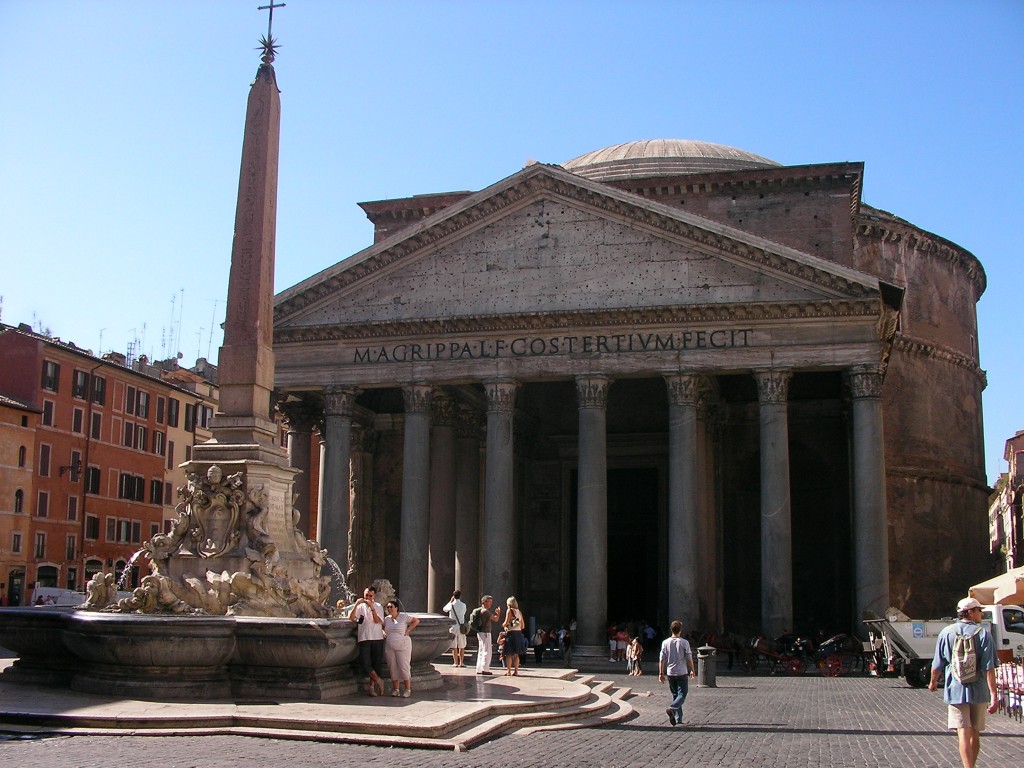
Piazza della Rotonda, 00186 Rome. See where to stay near the Pantheon for lodging options and the Pantheon vs Colosseum page for a side-by-side comparison with the Colosseum.
Opening Hours, Mass & Closures
The Pantheon operates on a single timetable with no separate seasonal hours. It is open 09:00–19:00 daily, year-round, with last entry at 18:30 and ticket sales stopping at 18:00, when the ticket office closes.
Mass interruptions
The Pantheon is an active Catholic basilica (Santa Maria ad Martyres). Tourist access is suspended during Mass: Saturday at 17:00 and Sunday at 10:30. Ticket sales stop one hour before each service, so 09:30 on a Sunday and 16:00 on a Saturday; during Mass the building is reserved to worshippers. If you want to see the building without an interruption, avoid Sunday mornings and Saturday afternoons.
Closures
The Pantheon is closed on only two days: 25 December and 1 January. It is open every other day of the year. Some secondary sources list reduced hours on 1 May and 15 August (Ferragosto); the official position is a year-round 09:00–19:00 timetable, but allow a little flexibility on those two public holidays if you are travelling then.
Best Times to Visit
- Early morning, 09:00–10:00 on a weekday — the quietest slot. Arrive at opening for the shortest queue.
- Late afternoon, 16:00–18:30 on a weekday — softer light through the oculus and fewer families with children.
- Avoid Sunday mornings if you want to skip the 10:30 Mass interruption and the free-Sunday crowds.
💳 What the €7 actually buys you
Entry to one of the best-preserved buildings of ancient Rome, still functioning as a church. There is no audio guide included and no skip-the-line; the Ministry’s own guided visits are free with the ticket but follow a monthly calendar. What you are paying for is the building itself — and a timed slot that guarantees you will get inside on a busy day.
Location & Getting There
The Pantheon is at Piazza della Rotonda, 00186 Rome, in the historic centre between Piazza Navona and the Tiber. It is a short walk from most central hotels and well served by bus lines along the Corso and Via Nazionale. The nearest metro stops are Spagna (line A) and Ottaviano (line A), each about a 10–15 minute walk away. For the buses, fares and parking, see Getting there.
For a full plan, pair this page with the rest of the Pantheon Rome guide:
- Opening Hours 2027 — the full daily schedule, Mass interruptions, and the best times of day.
- Hotels near the Pantheon — hotels next to and behind Piazza della Rotonda.
- Pantheon vs Colosseum — a side-by-side comparison for deciding between the two.
- History — how Agrippa’s original became Hadrian’s rebuild.
- What to See — the oculus, the coffered dome, and Raphael’s tomb inside.
Recent Comments